
Solar EV Charger Installation Perth
Your charger may draw grid power even while your roof is generating. Solar EV charger installation in Perth sets your charging up to follow your spare solar.
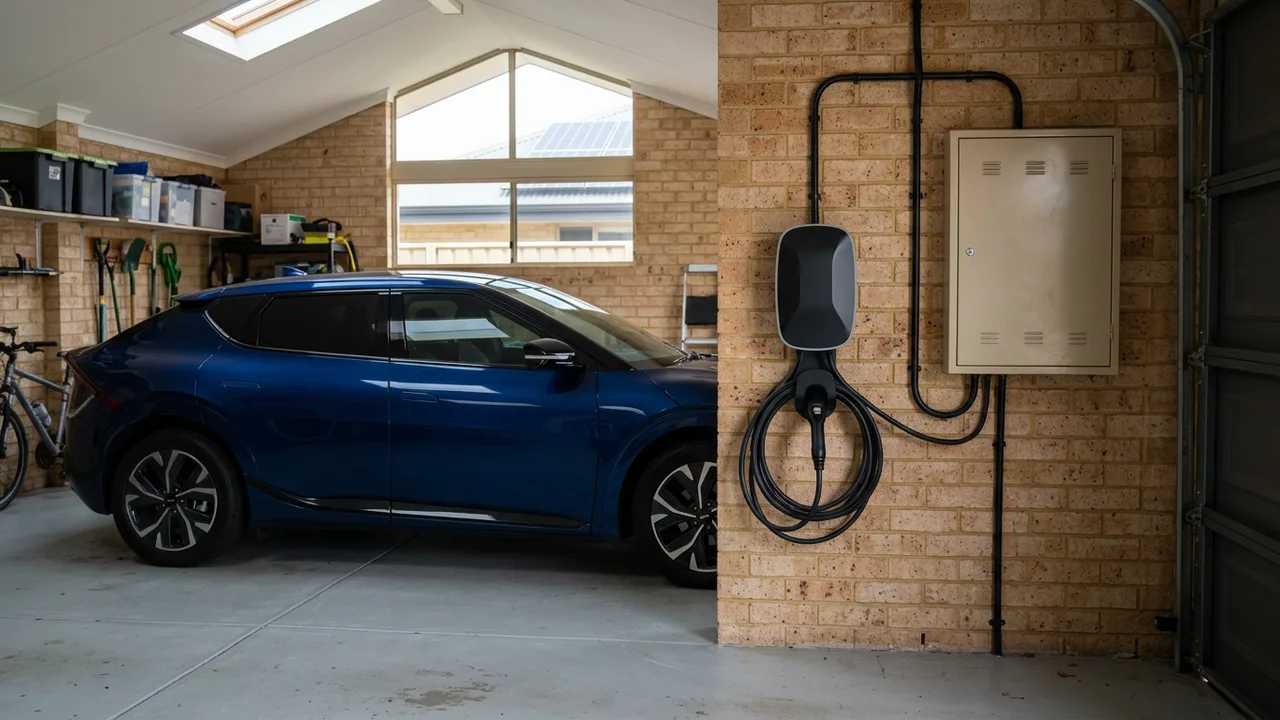
Your car can use electricity from your home solar system, but the charging setup needs to suit your inverter and available power. The aim is to use solar when it is available while keeping a practical way to charge when you need the car. Installation help covers Perth WA and nearby suburbs. For a Perth home, the design also needs to account for Western Power's demand limits when charging draws on the grid.
Solar EV charger installation in Perth: using the power your roof produces
Solar can supply your car while it is plugged in during generating hours. The benefit depends on how much electricity your roof produces beyond what the house is using at that moment.
A charger connected to a solar-powered home does not necessarily follow that changing surplus. Without suitable controls, it may also draw electricity from the grid when the car needs more than the solar system can supply.
Solar-aware charging uses information about the home's power flow to adjust charging. The electrician checks how the charger receives that information and what it does when solar output falls. That distinction matters if your main aim is to reduce purchased electricity.
Choosing EV chargers for your car and inverter
The right charger suits your vehicle and can work with the solar controls you need. Sharing a brand name with the inverter does not mean the equipment can communicate, and different brands may work together with a suitable setup.
For a Zappi V2 or another solar-compatible charger, the useful distinction is how it measures spare power. A timer starts charging at a set hour, even if appliances are using the solar output. Controls that measure grid power flow can respond to the surplus left for your car.
A charger you have already bought may be usable. Its condition and compatibility with your solar controls need attention before the installation is priced. Where a brand calls for particular installer training, that is worth resolving alongside the equipment choice.
A car charging schedule that fits your driving
A charging schedule helps when the car is available at predictable times. Daytime charging can make use of solar, while an overnight schedule may suit a car that is away from home during the day.
A timer follows the clock. Solar-aware control responds to available generation. Those functions serve different purposes, so the setup needs to reflect how you actually use the car.
A solar-only setting may leave you short of charge after poor generating conditions. A mode that allows grid power can provide more flexibility, though it changes the running cost. The electrician can explain how to change modes when your next trip matters more than using spare solar.
Electrical capacity and the installation price
Solar generation does not remove the need to assess your home's electrical capacity. The supply still needs to accommodate charging when generation drops and other appliances are running. WA Government guidance recommends an electrician assess the wiring before adding that load.
In Perth, Western Power's network demand limits matter alongside solar output. Under Western Power's rules, even a permitted 7kW single-phase charger connection remains limited by the site's maximum demand, meaning its assessed electrical load.
The property's demand assessment determines whether charging controls or electrical upgrades are needed. A faster charger is not automatically a better fit if the available supply limits its use.
Installation cost depends on the cable route and access, as well as work at the switchboard. Some routes need access through walls or ceilings. The proposed route should be clear in the quote so you understand the disruption involved.
Fixed electrical work belongs with an appropriately licensed electrician, who can identify any approvals needed for your installation. Handover notes showing the solar charging settings and sensor position give a later technician a starting point if charging stops following spare generation. Written workmanship warranty terms should distinguish installation faults from changes needed when solar equipment is replaced.
Planning batteries, business charging and later support
Future batteries should be considered before choosing charging controls. Otherwise, the battery and car may compete for spare solar in a way that does not match your priorities.
At a workplace, cars parked during generating hours may be able to use solar as it is produced. Lights and air conditioning use some of that generation, leaving less solar power for the parked cars.
A charger that stops following spare solar may have lost the signal that tells it how much power is available. Depending on the setup, a connection problem or a fault in the equipment measuring power flow could be involved. The electrician can trace that signal and test the controls to find the cause.
Request a project review for solar charging that fits where you park. An independent electrician can talk through how your inverter and household energy use affect the installation options.
How it works
-
Assess the home and solar system
The electrician looks at the inverter, switchboard and route to your parking space. Your usual charging needs show how much flexibility the setup needs beyond daytime solar.
-
Set out the equipment and installation cost
The proposed scope separates charger supply from installation labour and any electrical upgrades. Cable access and integration work affect the price. The likely duration becomes clearer once those details are known.
-
Install and test the charging controls
After installation, the electrician tests operation and explains the charging modes. A useful handover covers solar charging, scheduled charging and how to recognise a fault that needs attention.
Scope in detail
- Solar charging controls Charging can follow spare solar output rather than draw a fixed amount of power.
- Charger mounting and cable routing A reachable charging lead makes your usual parking position practical for charging.
- Electrical capacity assessment The available supply can limit charging even when your roof has solar panels.
- Testing and charging mode handover Knowing how to switch charging modes helps when spare solar cannot cover your next trip.
Solar EV charger installation options
- Solar charging for an existing home A sensor may measure power flowing between your home and the grid, allowing charging to respond to spare solar after household use. Its position matters because measuring only the inverter's output can miss electricity already being used inside.
- Charging with future solar or batteries A battery reserve setting can keep stored energy for the home. Once charging needs grid power, Western Power's site demand limits still apply. The controls need to account for that change, rather than treat battery capacity as extra grid capacity.
Solar EV charger installation across Perth
Frequently Asked Questions
What determines the cost of charging my car at home in Perth?
Can an overnight charging schedule reduce my home charging costs?
Can solar lower the cost of charging an EV at my Perth home?
Get it priced
Need charging where you park? Request help with an installation that suits your home.
Send through the details and we'll get the ball rolling.