
EV Charger Load Management Perth
Power tripping when the car charges while you're cooking or cooling the house? EV charger load management in Perth can limit charging demand around household use.
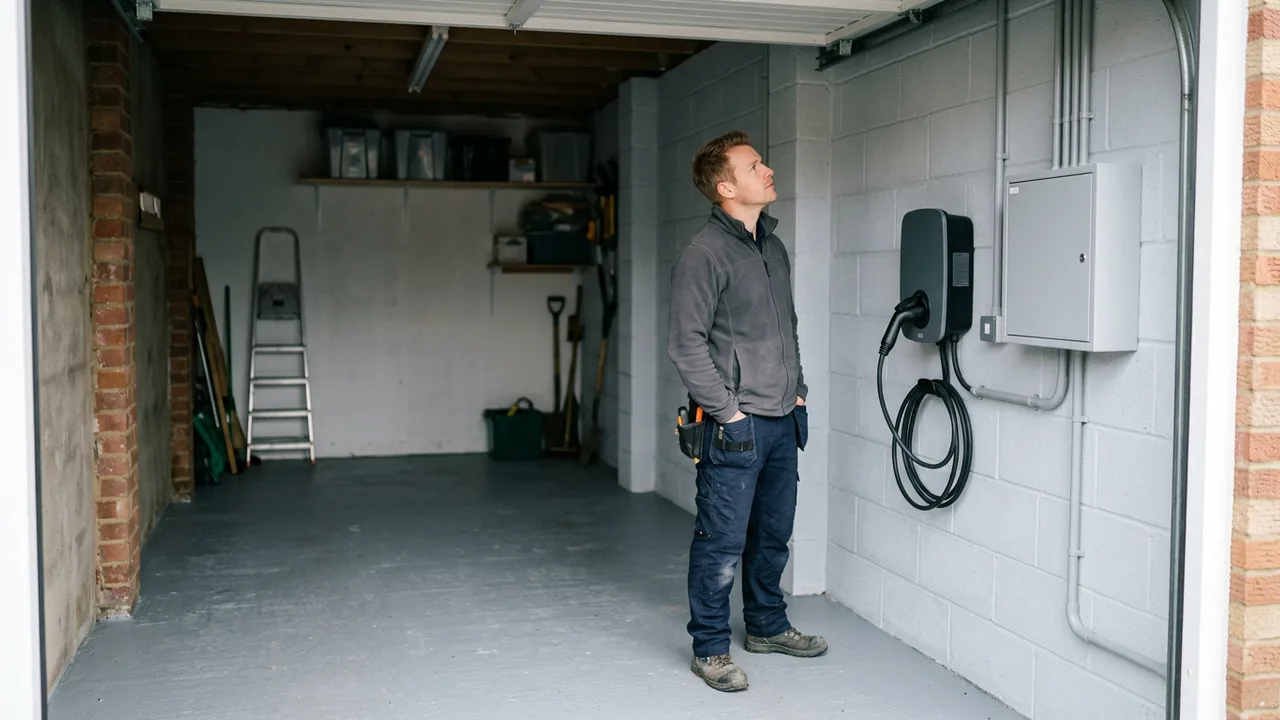
Your car can charge while household appliances run if charging demand stays within the property's available power. Load management adjusts the charger's draw as that spare capacity changes. If power trips when charging overlaps with cooking or cooling, an electrician needs to find the cause before deciding whether charging controls or electrical work would help.
EV charger load management in Perth: how it shares your power
Load management gives household appliances room to run by adjusting how much power the car draws. It can help when your charging needs fit within the energy available over the time the car stays parked.
The useful question is how much charge you need before leaving again. A car parked overnight has a different charging window from one that returns late and leaves early. Slower charging during cooking may suit the first household but leave too little charging time for the second.
Controls cannot add power to the supply. Your driving needs and the time available for charging determine whether sharing that supply will be practical.
Will it stop the power tripping when the car charges?
Load management can reduce overload-related tripping by limiting charging demand. A fault in the charger or wiring needs its own diagnosis, so repeated trips should not be treated as proof that power sharing is the answer.
Under Western Power's rules, permission for a 7kW single-phase charger connection still depends on the property's maximum demand. That means the highest combined load the property can support still limits charging.
WA Government guidance recommends an electrician assess household wiring before adding EV charging. That assessment helps establish whether charging controls are enough or electrical upgrades are needed.
Charging an electric car with solar panels
Solar-linked charging can use spare daytime generation when the equipment supports it. Household demand still matters because power used by appliances is no longer available for the car.
How far this goes depends on your inverter, your meter arrangement and the charger itself. Some combinations share data easily and others do not. Incompatible equipment may need an extra interface or a different control method, which changes the proposed work and its cost.
Charging software may show household use and charging activity, depending on the system. Automatic adjustment of charging power needs compatible equipment and a control link between the monitoring system and the charger.
Adding EV chargers to a shared supply
Additional chargers need a plan for sharing power as well as space to park. A shared system divides the charging allowance between connected vehicles, so adding a charger can mean slower charging while several cars need power.
For apartment charging, the allocated bay is only part of the job. The building supply and the cable path to that bay also affect what is possible.
Strata charging may also need approval for work involving shared property. Resident billing and access control depend on the equipment chosen. Future expansion needs allowance in the original design, rather than an assumption that any charger can join later.
Older switchboards and EV chargers
An older switchboard needs an assessment before charging is added. Its condition and available capacity matter more than its age alone. Load management can limit charging demand, but it cannot repair worn equipment or unsuitable wiring.
The monitoring sensor's position at the switchboard and its distance from the charger affect the work needed to connect the controls. If the switchboard needs upgrading, that adds electrical work beyond fitting the monitoring equipment. Separating those costs in the quote makes the proposed charging controls easier to weigh against the wider installation cost.
Load management support covers Perth WA and nearby suburbs, including Northbridge, East Perth and West Perth. The property's supply and household demand determine the suitable charging limit in each location.
For a load management Project Review, say which appliances are running when charging trips the power and when your car needs to be ready. An independent Perth specialist can assess whether charging limits or electrical work would suit that demand.
How it works
-
Look at your supply
The electrician inspects the switchboard, the wiring and the spot where the charger will sit, then works out how much power is realistically spare.
-
Choose the control method
A monitoring sensor, a compatible charger and any solar link are matched to your home, with a clear scope for each part.
-
Install and set limits
Licensed electrical work includes setting the charger's maximum draw to suit the assessed capacity of the property.
-
Test under load
The electrician runs the charger with household appliances on and shows you how it responds.
Scope in detail
- Home power monitoring Sharing your home's supply starts with measuring household use. A sensor tracks demand as appliances such as the oven or air conditioner start.
- Charger power limits Those readings work alongside a charging limit set by the electrician, based on the property's available capacity.
- Charging control setup Compatible controls use the readings to reduce the car's draw when household demand rises, then allow more charging power as demand falls.
- Solar charging controls A compatible solar link can also account for spare generation, while the household supply limit still governs charging demand.
- Power sharing between chargers When another car needs charging, shared controls divide the charging allowance between connected vehicles. Each car may charge more slowly while both need power.
EV charger load management options
- One car with competing appliance demand Household demand control suits charging that overlaps with cooking or cooling. It adjusts charging around those loads without needing solar output to guide it.
- A car parked at home during sunshine Solar-linked control may suit a car available to charge during the day. For a car away until evening, household demand control may be more useful.
- More cars on a limited supply Shared charging suits vehicles that can remain plugged in while power is divided. The useful charging window matters as much as the number of chargers.
- An allocated apartment bay A building-wide plan may be needed where bays use a shared supply. Individual billing and access control are separate choices from managing electrical demand.
EV charger load management across Perth
Frequently Asked Questions
Can I add a second charger at my Perth home?
Why is my home EV charging slower than expected?
Can an EV charger overload an older Perth switchboard?
Get it priced
Need charging where you park? Request help with an installation that suits your home.
Send through the details and we'll get the ball rolling.