
EV Charger Installation in South Perth
You need to know if your South Perth switchboard can take a charger and what the cable run could cost. An electrical assessment settles both before you commit.
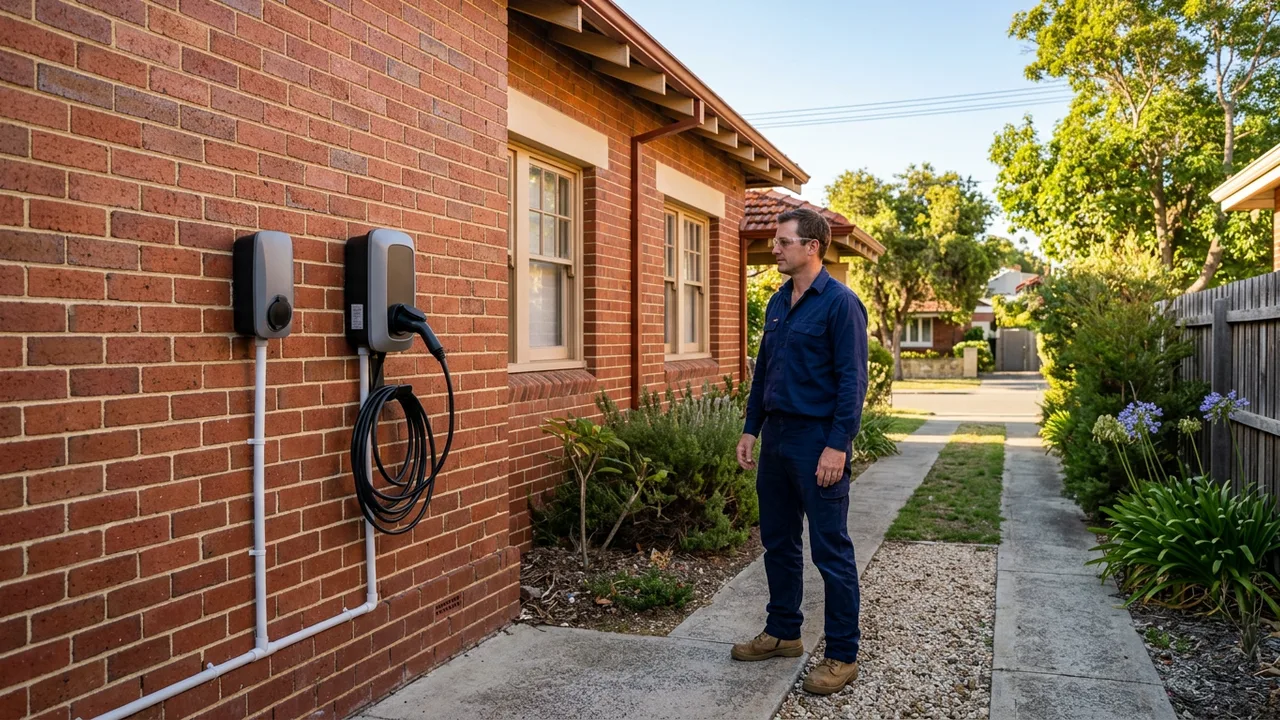
Home charging needs a power supply that can handle the extra demand and a practical cable route to your parking space. The cost depends on the work between the switchboard and the car, as well as the charger itself. A driveway installation can involve different cable access and electrical work from charging in a shared apartment bay.
Services in South Perth
- EV charger maintenance and repairs Charger repairs start by separating equipment faults from electrical supply and connection problems.
- EV fast charger installation Faster charging depends on the charger, your car and the electrical power your property can supply.
- Home charger supply and installation Home charging brings your parking space, charger choice and available electrical supply together.
- Solar EV charger installation Solar charging links your car's power needs with rooftop generation and the electricity your household uses.
- Apartment and strata EV charging Apartment charging involves your allocated bay, shared power capacity and individual energy use.
- EV charger load management Load management shares your home's power between the charger, household appliances and any extra chargers.
South Perth: EV chargers for your home parking space
Your parking position shapes where a charger can go and how you will use it. A wall beside the car may offer a straightforward mounting position. A bay away from the house can need a longer cable route or a separate mounting arrangement.
The charging lead should reach the car's socket without stretching across a walkway. Storage beside the charger keeps the lead off the path when the car is unplugged. A convenient position matters because you will use it repeatedly, often while carrying shopping or getting the household indoors.
Your daily driving also helps determine the charging power you need. A higher rated charger does not automatically charge every vehicle faster. The vehicle's charging limit and the power available at home both affect the result.
Available power comes before charging speed
Your home needs enough power to charge your car while other appliances run. A free space in the switchboard alone does not show that the supply can take the extra load.
Charging may be possible within the existing supply, or electrical work may be needed first. Load management adjusts the charger's demand as other appliances use power. Charging can slow while household demand is high, then increase as more capacity becomes available.
Extra room for a new circuit and enough capacity to power it are separate issues. The quote should distinguish work needed for charging from work addressing an existing electrical issue.
A charger you own or charging from solar
A charger you have already bought may be suitable for installation if its electrical needs suit your supply and its connection suits your vehicle. Its mounting instructions also affect where it can go. Equipment compatibility matters before a cable route is settled.
For solar charging, the useful question is how the charger will respond to the power your panels produce. A charger with suitable controls may vary charging to use available solar generation. Your car needs to be plugged in while that power is available to benefit from it.
Solar panels do not remove the need to assess household wiring. Charging still adds demand when rooftop generation falls or household use rises. The installation scope should make clear which solar charging features depend on extra equipment or settings.
Charging in an allocated apartment bay
Charging in your allocated bay depends on where the electricity comes from and whether the cable crosses shared property. Permission for work in shared areas can affect the route, even when the charger sits entirely within your bay.
The cable needs a workable path from the supply to your parking space, including through any shared areas. If charging uses shared electricity, a way to measure your use helps separate it from the building's other consumption. These details can make an apartment installation different from mounting a charger beside a private garage.
A shared supply may need charging controls that respond to the building's available power. The workable option depends on the building and its existing electrical system, rather than the charger alone.
What changes the installation quote
Cable routing and electrical work can change the installation cost independently of the charger price. A long route to a detached parking space involves different work from a charger beside the switchboard. Concealed wiring may also involve access through walls or ceilings.
A surface cable route may reduce the need to open walls. How that route looks, and how the cable is protected, form part of the decision. The suitable approach depends on the building and the parking position.
A useful quote separates the charger equipment from installation work and any proposed electrical upgrades. It should identify the intended cable route so you can understand what the agreed price covers.
Local housing and access around the river
Home charging near Canning Highway, Mill Point Road and Angelo Street depends on a cable route that reaches your own parking space. South Perth is largely residential, while these roads also carry commercial uses. If your home shares an entrance with commercial premises, the route needs to accommodate access for both uses.
Denser housing around Mill Point and Point Belches makes shared parking arrangements relevant to charging near the river. The waterfront includes South Perth Esplanade and Sir James Mitchell Park. In a shared building, access to the electrical supply and permission to cross common areas can shape the installation more than the distance to your bay.
Canning Highway also has a documented group of older, single-storey houses. Previous wiring alterations in an older home can affect the route for a new charging circuit. Surface cabling may offer an alternative where concealed wiring would mean opening finished walls.
Time parked at home also affects how useful charging will be. If you leave the car at home while walking to Perth Zoo or Royal Perth Golf Club, it can charge during that time. Using solar generation depends on those parked hours overlapping with available sunlight.
WA Government guidance recommends having an electrician assess the extra demand vehicle charging places on household wiring. The electrical contractor responsible for the work has a different role from the licensed electrician carrying it out.
For a project review, include your parking arrangement and the approximate distance from the switchboard in your message. These details help define the cable route and electrical work your home charging needs.
Frequently Asked Questions
Should my South Perth charger installer be licensed and insured?
Get it priced
Need charging where you park? Request help with an installation that suits your home.
Send through the details and we'll get the ball rolling.