
EV Charger Installation In Kensington
The charger price alone won't tell you what home charging in Kensington will cost. The cable route and spare power at your home help set the installation cost.
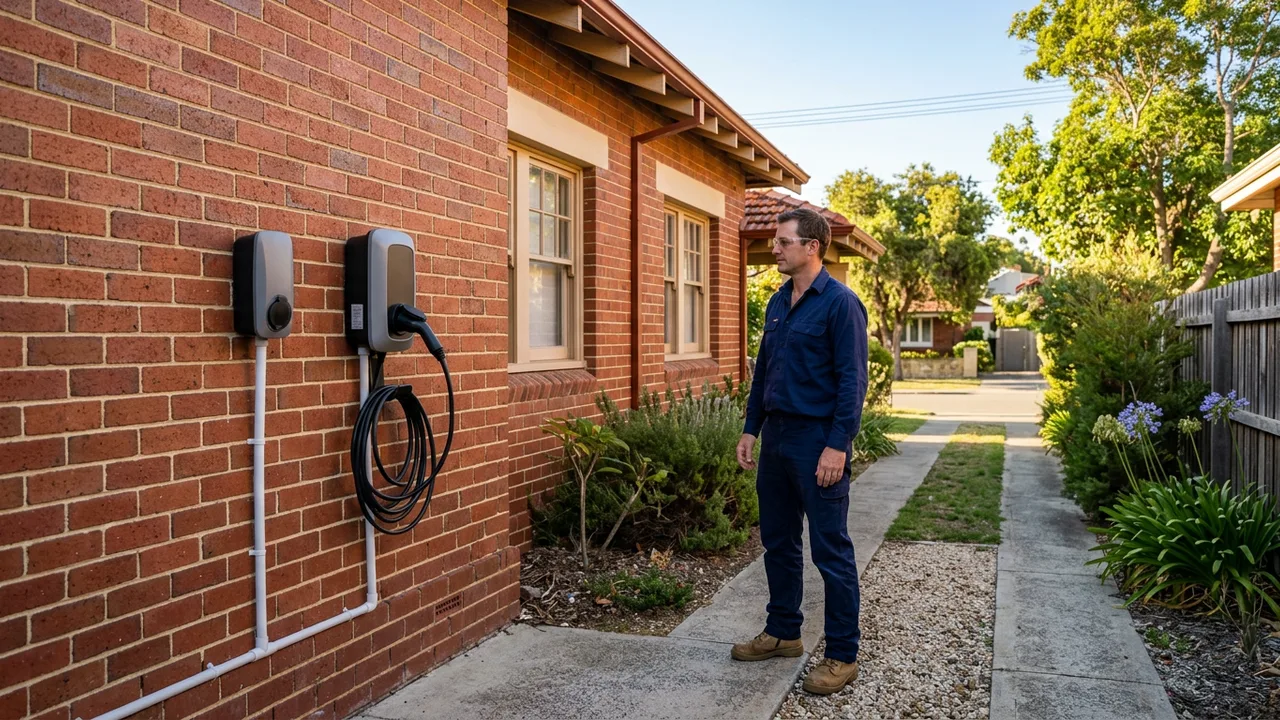
The charger is one part of your home charging budget. Installation covers getting power safely from the switchboard to the place you park, with electrical upgrades priced separately if needed. The balance between those costs depends on your property. A charger mounted close to a suitable switchboard involves different work from one across a driveway or behind finished walls. A useful quote makes those differences clear before you commit.
Services in Kensington
- Home charger supply and installation Home charging brings your parking space, charger choice and available electrical supply together.
- Solar EV charger installation Solar charging links your car's power needs with rooftop generation and the electricity your household uses.
- Apartment and strata EV charging Apartment charging involves your allocated bay, shared power capacity and individual energy use.
- EV charger load management Load management shares your home's power between the charger, household appliances and any extra chargers.
- EV charger maintenance and repairs Charger repairs start by separating equipment faults from electrical supply and connection problems.
- EV fast charger installation Faster charging depends on the charger, your car and the electrical power your property can supply.
Kensington: why cheaper EV chargers can cost more to install
The equipment price pays for the charger itself, while the installation price covers the electrical work needed to use it at home. A lower equipment price does not always mean a lower total bill. The position of your parking bay and the state of the electrical supply can change the scope.
A charging cable needs to reach the vehicle comfortably without stretching across a walking route. Controls for scheduled charging may be useful if you want the car to charge at set times.
An independent electrician can assess the proposed charger alongside your home's supply. That gives you a clearer basis for choosing equipment than its advertised charging speed alone. A faster unit may offer little benefit if your home cannot supply that much power.
A charger you already own may suit the job
A charger you have already bought may be suitable, but the electrician needs to assess it before agreeing to install it. The unit must suit your vehicle and the electrical supply available at the property. Its mounting position also needs to work with the cable and your normal parking position.
Buying equipment first can narrow your options if the unit needs more power than the home can spare. It may still be usable at a reduced charging setting, depending on the equipment. The unit's controls determine whether that adjustment is available.
Keeping the charger you own may avoid another equipment purchase. A lower charging setting could still suit your daily driving if the car stays parked long enough to gain the charge you need.
Cable routing can change the installation cost
The route from the switchboard to your parking space can add more work than the charger mounting itself. Cable may be able to run through an accessible roof space or along a surface in protective conduit. Conduit is a protective tube that carries the wiring.
Opening walls is not inevitable. The available access and your preferred finish determine which routes are practical. Hidden wiring can involve more labour and repairs to the wall finish afterwards. A visible route may leave more of the existing finish intact.
A detached parking space can present a different job from a charger on a garage wall. Wiring that crosses an exposed area needs suitable protection. The cable route also affects where the charger can sit without leaving its charging cable across a path.
Available power matters more than the label
Your home needs enough spare electrical capacity to support the proposed charging load. Running the charger alongside other appliances adds to the demand on your supply. The electrician assesses that combined demand before recommending a charging setting or electrical changes.
A switchboard upgrade is a possible part of the job, rather than an automatic addition to every installation. Its condition and available space help determine what work is needed. Charging controls may also help manage the load, depending on the charger and the property.
For solar charging, compatible controls can adjust the car's charging rate to use spare power from your panels. The charger and solar equipment need to support that control arrangement. Appropriately licensed electricians carry out the fixed electrical work and provide the required documents.
Charging at homes around the suburb
An installation at a Kensington home starts with the existing wiring and access to the parking space. The suburb grew during the years after the war. Renovations since then may have changed a home's electrical supply or the available cable route, so building age alone cannot settle the installation scope.
Kensington is a residential area 3 km from Perth's city centre. Berwick Street forms its northern edge, Kent Street its eastern edge, and Hayman Road follows part of its southern edge.
For a home near Kensington Primary School, Meadowvale Shops or Moresby Street Reserve, previous renovations can affect the cost of concealing charger wiring. An accessible roof space may provide a route to the parking area, while finished extensions can make that route harder to reach. The electrician assesses the home's layout to establish the work involved.
WA Government guidance recommends an electrician's assessment of the extra demand that charging places on household wiring. For your installation budget, that assessment helps establish if the work can use the existing supply or needs electrical changes.
Under Western Power's connection rules, permission for a 7kW single-phase charger still depends on the property's maximum demand limits. A single-phase charger draws from the same supply that powers your household appliances, so its output must fit within the home's available capacity. Maximum demand is the assessed load from charging and other electrical equipment operating together. That limit can affect the charging setting available at your home, even when the equipment supports a higher output.
Request a project review for help with your home charging budget. A specialist can talk through an itemised quote based on your parking space and switchboard, with equipment and electrical work priced separately.
Frequently Asked Questions
What will the charger itself cost for my Kensington home?
Get it priced
Need charging where you park? Request help with an installation that suits your home.
Send through the details and we'll get the ball rolling.