
EV Charger Installation In West Leederville
An EV charger at your West Leederville property needs power at the bay and permission for any shared areas. A practical proposal also covers how you pay for charging.
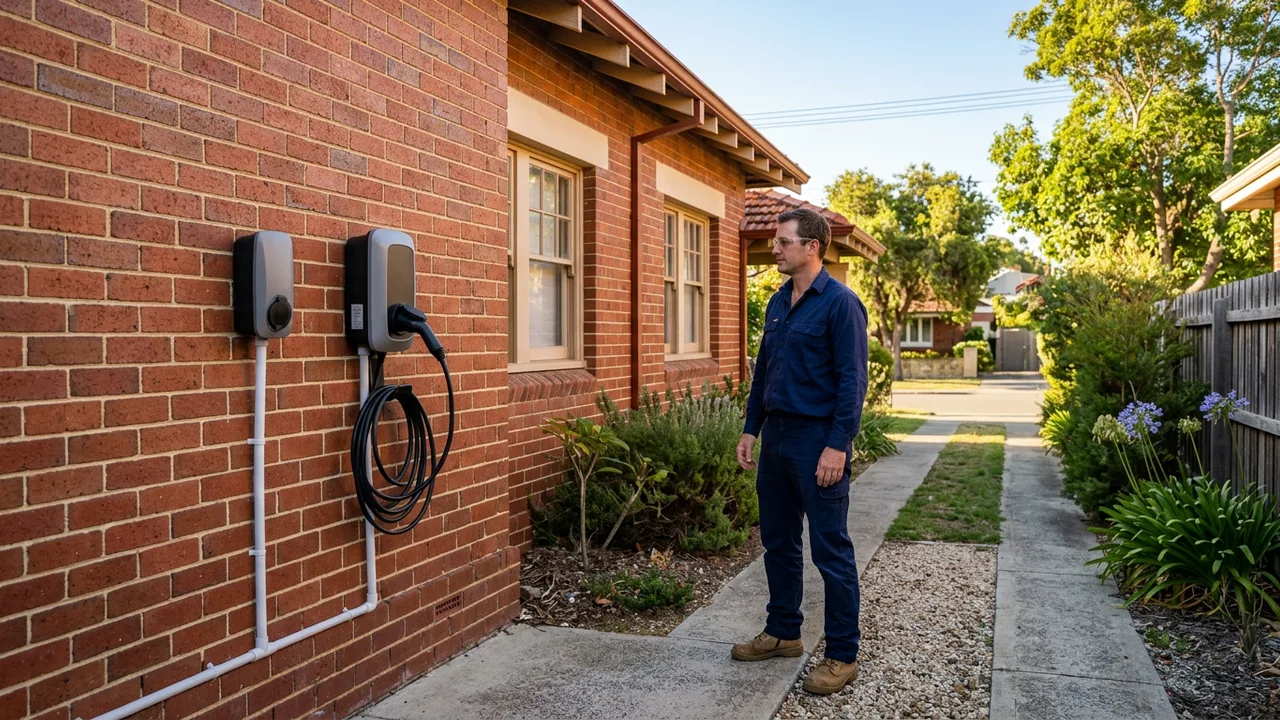
You can add a charger to your medium-density property, including an allocated parking bay, once the supply, cable route and approvals are in place. The distance from the switchboard and what the cable must cross help determine the work involved. Charging also adds demand to the property's electrical supply. Shared ownership can add approval and metering questions. A suitable installation starts with those details, so the proposed charger and cable route suit the place you actually park.
Services in West Leederville
- Solar EV charger installation Solar charging links your car's power needs with rooftop generation and the electricity your household uses.
- Apartment and strata EV charging Apartment charging involves your allocated bay, shared power capacity and individual energy use.
- EV charger load management Load management shares your home's power between the charger, household appliances and any extra chargers.
- EV charger maintenance and repairs Charger repairs start by separating equipment faults from electrical supply and connection problems.
- EV fast charger installation Faster charging depends on the charger, your car and the electrical power your property can supply.
- Home charger supply and installation Home charging brings your parking space, charger choice and available electrical supply together.
West Leederville: EV chargers for shared parking
An allocated bay can support home charging if there is a suitable electrical supply, a practical cable route and permission for work on shared property. Owning or using the bay does not settle who controls the walls, driveway or switchboard along that route.
For a strata property, the proposed work may need to go through the strata approval process. A proposal showing the cable route and charger position gives the owners something concrete to consider before installation starts.
The charger also needs to work around everyday parking. Its position should let the lead reach your car's charging port without stretching across a walkway or neighbouring bay. A wall beside the car may suit the job, while an open bay may need a separate mounting arrangement.
Getting power to your bay
The distance and access between the electrical supply and your parking space can make installation more involved than mounting the charger. Even with a wall beside your bay, a new circuit may need to run back to the switchboard.
Accessible ceiling spaces or surface conduit, which is protective tubing for wiring, may offer a route back to the switchboard. Where the path crosses finished walls or paving, the quote should identify the proposed work and any making good needed afterwards.
Shared parking also raises the question of who pays for the charging electricity. A connection to your own meter may be an option. If power would come from a shared supply, the proposal needs an agreed way to measure and allocate that use. The practical options depend on the existing wiring and access.
Choosing charging that suits your power supply
Your charger needs to fit the power available at the property as well as your car. Faster charging draws more power, leaving less capacity for household appliances running at the same time.
The electrical assessment establishes the load, meaning the electricity being used, and the capacity left for charging. Load management can reduce the charger's demand while other equipment is running. This may offer an alternative to an electrical upgrade, depending on the equipment and installation.
Daily driving matters too. A car parked at home for long periods may not need the fastest charging option available. If you have already bought a charger, its supply needs and mounting instructions become part of the assessment. Supply and installation together cover the charger itself and the circuit back to your switchboard, so the quote can show both costs.
Using solar power for charging
Solar charging may suit your property if the car is parked there while your panels are producing electricity. The charger must be compatible with the solar system, with enough power available after the home's other electricity use.
Some chargers can slow down or pause so the car uses solar power your home is not already using. Compatibility matters, particularly if the charger or solar equipment is already installed.
In shared housing, panels on the building may serve a different meter from your parking bay. Tracing that connection establishes where the solar power goes and whether it can supply charging at your bay. The electrical connections and ownership arrangements determine the options.
What changes the installation price
The installation price depends on the cable route, the available electrical capacity and the work needed at the parking bay. Charger equipment and any switchboard changes should be clear parts of the scope, so you can see what each cost covers.
A long or difficult cable path can add labour and materials. Work through shared areas may also need access arrangements before it can proceed. An electrician's assessment establishes which of these issues apply to your property.
For help with a proposed installation, request a project review covering your parking bay and charging needs. Include where you park and what lies between the bay and switchboard. These details give an independent specialist a starting point for assessing a practical installation.
How the local setting affects your installation
Medium-density housing makes the boundary between private and shared property relevant to charging in West Leederville. Residential installation help covers homes around Cowden Park, West Leederville Primary School and Leederville Memorial Gardens. At a shared property, a cable may need to cross a common wall or driveway even when the bay belongs to you. The proposal needs to account for those shared areas as well as the parking space.
East of Southport Street, a small commercial pocket includes warehouses. Charging at a property there needs a cable route that works around vehicle access. The connection to the property's meter also determines whose electricity supplies the charger.
For an allocated bay in West Leederville, include the parking entrance and bay location with your enquiry so the electrician can assess access to the supply. The installation location needs to identify the property and its parking entrance, particularly where vehicle access differs from the street address.
In WA, a licensed electrician is required to install a dedicated home charger or a new charging power point. For a shared bay, that electrical work and permission to cross common property are separate parts of getting the installation ready.
Frequently Asked Questions
Does installing a home charger in West Leederville need a licensed electrician?
Get it priced
Need charging where you park? Request help with an installation that suits your home.
Send through the details and we'll get the ball rolling.