
EV Charger Installation in East Perth
Your East Perth parking bay may have no power nearby. An electrician assesses how a charger reaches your car from a suitable supply.
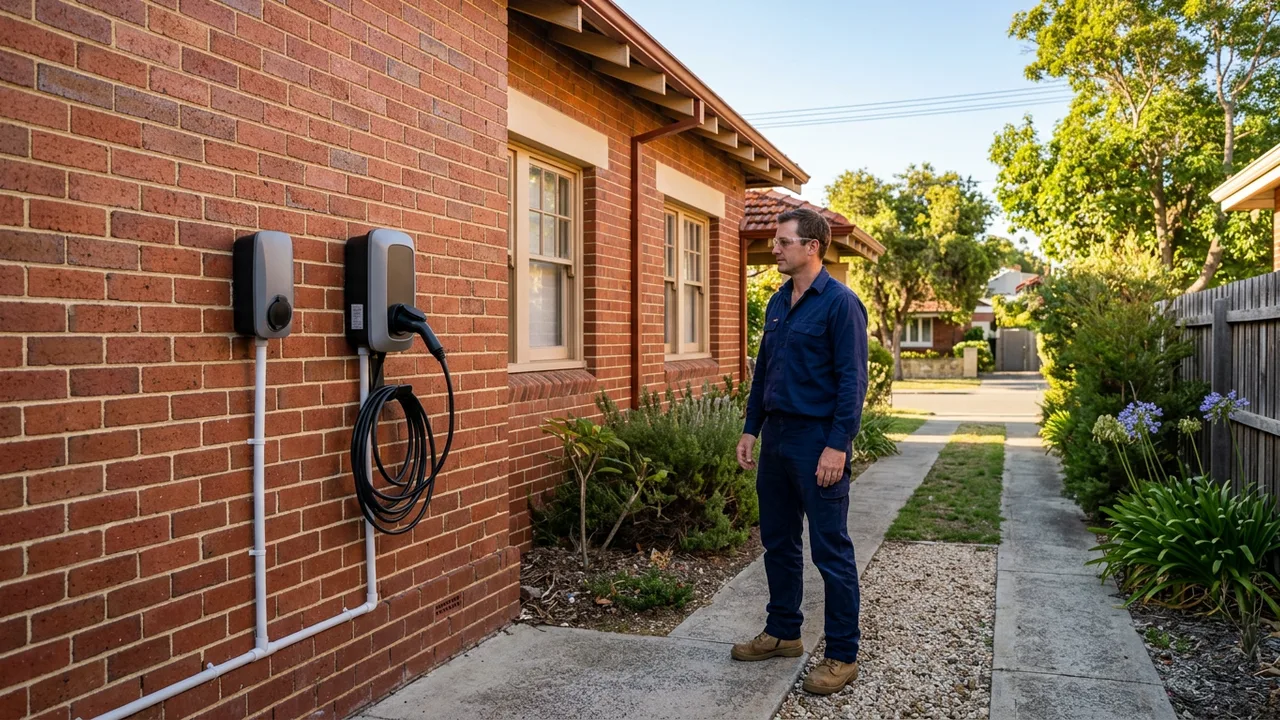
Charging in a shared parking area works when the charger serves an agreed space and has a suitable electrical connection. An independent electrician can assess your parking arrangement before recommending equipment or electrical upgrades. The aim is reliable charging in the bay you use, with permission for any work on shared property.
Services in East Perth
- Solar EV charger installation Solar charging links your car's power needs with rooftop generation and the electricity your household uses.
- Apartment and strata EV charging Apartment charging involves your allocated bay, shared power capacity and individual energy use.
- EV charger load management Load management shares your home's power between the charger, household appliances and any extra chargers.
- EV charger maintenance and repairs Charger repairs start by separating equipment faults from electrical supply and connection problems.
- EV fast charger installation Faster charging depends on the charger, your car and the electrical power your property can supply.
- Home charger supply and installation Home charging brings your parking space, charger choice and available electrical supply together.
East Perth: charging where parking is shared
An allocated resident bay gives the electrician a starting point. The charger also needs a suitable power supply and an agreed place to sit. A visitor space needs a different discussion because access changes between drivers. A charger intended for your car should not depend on a bay being available by chance.
The position of your vehicle's charging socket affects where the charger sits and how its lead reaches the car. A workable layout keeps the lead out of walking routes and avoids stretching it across another parking space.
Shared walls and parking structures can also affect the job. Permission for equipment or cabling on shared property needs to be settled before that work proceeds. The proposed route should make clear where the cable travels and which shared surfaces it touches.
Power available for EV chargers
Your charger needs enough power to run alongside appliances such as the oven and air conditioner. The electrician assesses their combined demand against what your supply can carry. Available supply capacity and space in the switchboard help determine how it can be connected.
A switchboard upgrade is a possible part of the job, rather than an automatic addition. The assessment may find room for a dedicated charging circuit. It may instead show that work is needed before the charger can be connected. A dedicated circuit supplies the charger separately from other household circuits.
Load management may be another option. It adjusts charging demand as other electrical use changes, helping the charger operate within the available supply. Compatible equipment needs a way to monitor that changing demand. In shared parking, the supply serving your bay also matters, especially if it powers shared equipment as well as your charger.
Cable routes and the installation price
The path from the switchboard to your parking bay can make a big difference to installation cost. A nearby bay with an easy cable route involves different work from a bay reached through shared areas. Wall openings may be needed, depending on the route available and how the cable can be protected.
A useful quote separates the charger equipment from the work needed to connect it. Cable routing and any switchboard changes should be clear enough for you to understand what the price covers. Repairs to surfaces disturbed during installation also need an agreed place in the scope.
Fixed electrical work needs an appropriately licensed electrician and the required documentation. This matters when deciding who will carry out the installation, particularly where the work extends beyond your own home into shared parking.
A charger you own or charging from solar
A charger you have already bought may be suitable, but its power needs and mounting position still matter. Its connection needs must suit the available supply, and its lead needs to reach your vehicle within your bay. The installation quote depends on the equipment being suitable for that connection.
Solar charging depends on how the charger uses the power your solar panels produce. Some equipment can adjust charging to use surplus solar power. This is electricity left after the home has used what it needs. The charger and its controls need to work together for this option to work.
The time your car is parked at home matters too. A car away during daylight hours has different charging needs from one parked beside the charger while the panels produce power. That helps shape a practical setup without assuming solar will cover every charging session.
Parking and residential layouts around the suburb
East Perth's neighbourhood priorities include managing parking for residents and visitors. For a home near Claise Brook, Claisebrook Cove or Queens Gardens, a charging proposal therefore needs to address who can use the bay. Equipment beside an allocated resident space serves a different purpose from a charger in visitor parking. Shared use brings questions about access to charging and keeping the bay available for its intended users.
New urbanism shaped the design of East Perth's newer residential neighbourhoods, considering homes and streets as parts of a neighbourhood. For charging, the useful connection is between your dwelling and the place your car actually stands. If parking is reached through a separate entrance, the cable route may differ from the route you walk from your front door. A bay separated from the dwelling can involve a longer cable run or work across shared property. The electrician assesses the actual layout before proposing that route.
Where residents and visitors share a parking area, a private charger needs an agreed bay and clear access arrangements. Installation may also need temporary space for tools beside the cable route. Access to neighbouring bays during the work belongs in that discussion.
WA Government guidance recommends an electrician assess whether home wiring can carry the added demand from charging. Where your bay sits away from your home, the power supply serving it needs attention too. Charging would add to any demand from shared equipment already using that supply, which may limit the power available for your car.
Request a project review for your parking arrangement and charging needs. A specialist can talk through the options for reaching your bay and identifying the electrical work involved.
Frequently Asked Questions
How long could an East Perth charger installation take after assessment?
Get it priced
Need charging where you park? Request help with an installation that suits your home.
Send through the details and we'll get the ball rolling.