
EV Charger Installation In Highgate
Installing a charger at your Highgate home needn't mean opening walls or replacing the switchboard. The cable route and spare power help determine what's needed.
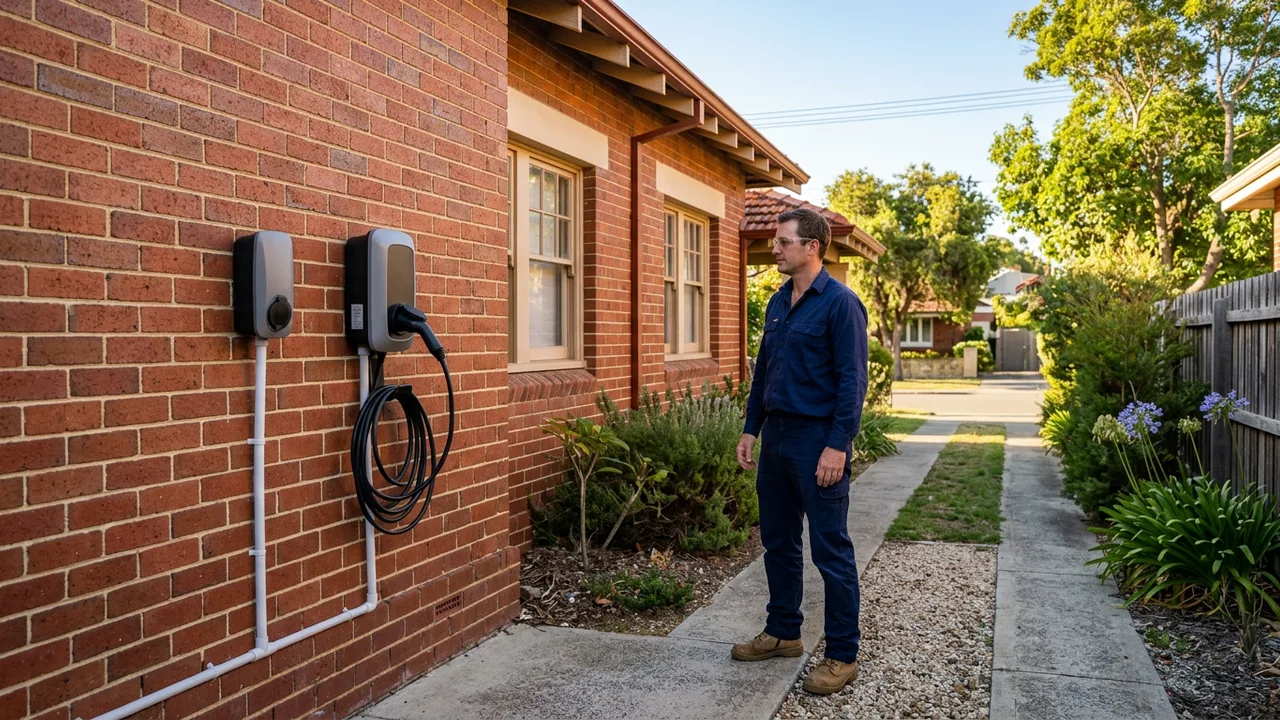
Fixed charger installation connects a dedicated charger to your home's power supply, with a cable route that reaches your parking space. At an established property, the key questions are where that cable can go and how much power the home can safely supply. Your electrician checks the switchboard and parking space before settling the scope. A suitable installation balances your daily driving needs with the work your home needs, rather than choosing equipment on charging speed alone.
Services in Highgate
- EV charger load management Load management shares your home's power between the charger, household appliances and any extra chargers.
- EV charger maintenance and repairs Charger repairs start by separating equipment faults from electrical supply and connection problems.
- EV fast charger installation Faster charging depends on the charger, your car and the electrical power your property can supply.
- Home charger supply and installation Home charging brings your parking space, charger choice and available electrical supply together.
- Solar EV charger installation Solar charging links your car's power needs with rooftop generation and the electricity your household uses.
- Apartment and strata EV charging Apartment charging involves your allocated bay, shared power capacity and individual energy use.
Highgate: EV chargers for established homes
Your parking position sets the starting point for a fixed charger. The unit needs to sit where its charging lead can reach the car without stretching across a walkway or blocking access. A handy wall is only useful if the power cable can reach it by a sensible route.
The path from the switchboard needs suitable access. At an established Highgate home, the roof space may offer a cable route, subject to an inspection. Wall construction and exposed outdoor sections also affect how the cable is installed. The building's age alone cannot tell you what is behind a wall.
The charger also needs to suit your vehicle and the amount of driving you do. A higher charging rating does not always mean a better result at home. The car's charging limits and your home's power supply both affect what will work.
Will the cable run mean opening walls?
Opening walls may be avoidable, depending on access and the route between your switchboard and parking space. Harley Street's Federation residences make the appearance of new cabling worth considering alongside access. Existing finishes can influence the choice between a hidden route and visible conduit, a protective cover for the cable.
Running the cable through roof or wall spaces keeps it out of sight where access allows, though difficult access can add work. Surface conduit can offer an easier route, although its position and appearance matter on a finished wall.
Any expected wall openings or repairs should be clear in the installation scope. That matters if you want to preserve existing finishes. The route needs a closer look before plans for a neat finish become part of the price.
Does the switchboard need upgrading?
A switchboard upgrade depends on its condition and available capacity, not just the fact that you are adding a charger. Its condition and the power used by existing equipment help your electrician assess whether changes are needed.
Charging draws power for as long as the car needs it. Cooking equipment or other large appliances may be using power at the same time. The power check needs to account for that overlap, rather than treating the charger as the home's only load.
Depending on the equipment, a lower charging setting or load management may be an option. Load management adjusts charging to account for other power use. The assessment establishes whether that approach suits the property or whether electrical upgrades form part of the job.
Using a charger you already own
An electrician may be able to install your existing charger after checking that it suits the vehicle and property. The installation assessment covers its connection needs and the work needed at the switchboard.
The unit's fitting guide helps the electrician work out how to connect it and which features it supports. Where you want to mount it also matters. Equipment bought for a different setup may need a revised plan.
Solar charging needs its own discussion if you want to use spare generation. The charger needs compatible controls to adjust charging as available solar power changes. Your electrician can assess how the unit would work with your existing solar equipment.
What affects the installation price?
Cable routing and electrical upgrades can change the installation cost separately from the charger price. A short, accessible route involves different work from a difficult run through finished parts of an established house.
A useful quote separates the charger equipment from installation labour and materials. Any proposed switchboard work should also be clear, so you can see what is driving the total. If you already own the charger, the remaining cost still depends on what work your home needs.
The agreed scope should make the mounting position and cable route clear. It should also identify any work needed to restore disturbed finishes. These details help you understand the price without assuming that buying the charger has covered the whole installation.
Established streets and access around Highgate
Existing wall finishes can influence where charger cabling goes and how it looks once installed. For an established home, the electrician looks for an accessible entry into the roof space and a path down to the charger that avoids unnecessary damage.
Highgate sits within Lincoln, Lord, Harold and William Streets. Around Lincoln Street Vent, a charger facing the street may need a different cable route from one beside rear parking. For a home near Highgate Hill Police Station or Mary Street Piazza, the parking position likewise matters more to the installation than the nearest street frontage.
Harley Street's Federation character includes single storey homes. At a property with decorative finishes, a visible cable cover may need careful positioning, while a concealed route depends on access inside the building.
Some Highgate houses date from before 1910. At an older property, the installation scope can include how new cable entries will be finished. A switchboard moved during a later renovation can also change where the charger cable starts.
Installation help extends across Perth WA and nearby suburbs, including Northbridge, East Perth and West Perth, with the work assessed at each property.
In WA, a licensed electrician must carry out installation of a dedicated home charger or a new charging power point. That makes the electrical assessment part of choosing a workable installation, including the connection and testing needed for the job.
For a project review, give your parking position and the approximate distance from the switchboard in your message. These details provide a starting point for discussing the cable route and power supply with an independent electrician.
Frequently Asked Questions
Can I install an EV charger myself at my Highgate home?
Get it priced
Need charging where you park? Request help with an installation that suits your home.
Send through the details and we'll get the ball rolling.