
EV Charger Installation in Mount Lawley
No power near your parking bay can make home charging feel out of reach. An electrician can assess your Mount Lawley home's supply and a practical cable route.
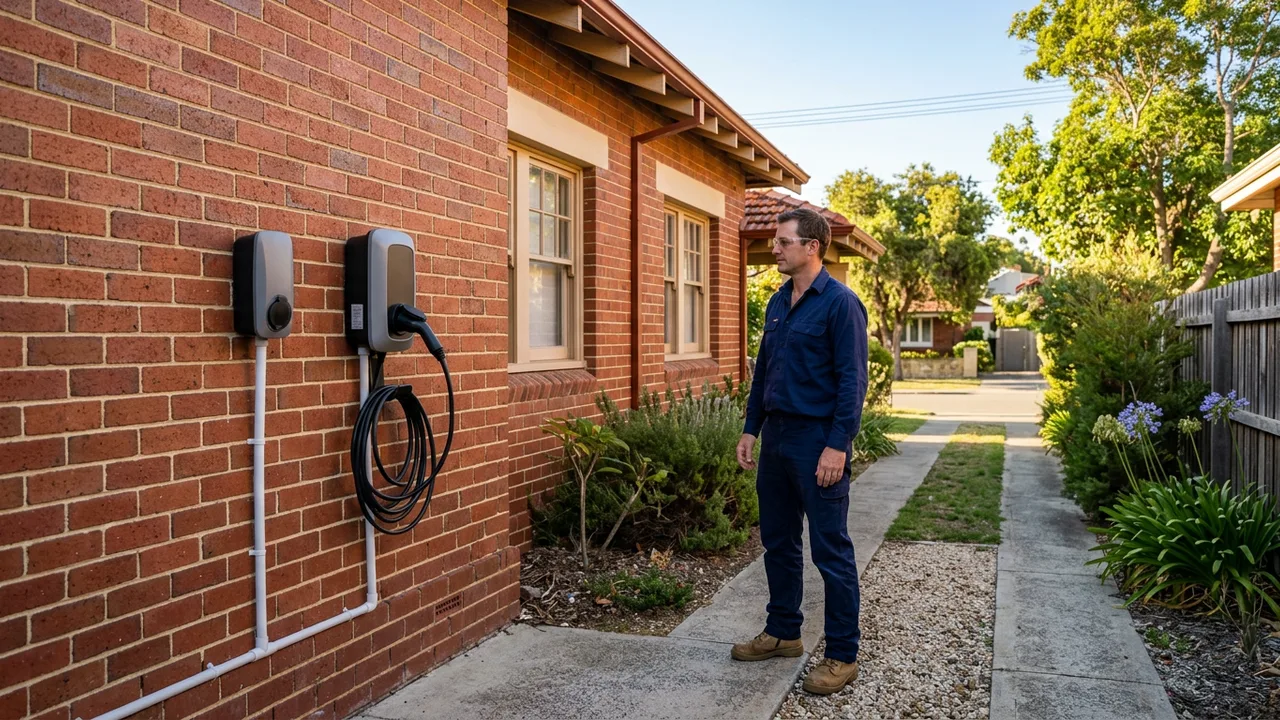
An EV charger can suit an allocated parking bay if wiring can reach it and electricity use can be accounted for. In a shared garage, the nearest wall may belong to common property, so mounting a charger there can need approval. The installation price should separate the charger itself from the wiring and any electrical upgrades.
Services in Mount Lawley
- Apartment and strata EV charging Apartment charging involves your allocated bay, shared power capacity and individual energy use.
- EV charger load management Load management shares your home's power between the charger, household appliances and any extra chargers.
- EV charger maintenance and repairs Charger repairs start by separating equipment faults from electrical supply and connection problems.
- EV fast charger installation Faster charging depends on the charger, your car and the electrical power your property can supply.
- Home charger supply and installation Home charging brings your parking space, charger choice and available electrical supply together.
- Solar EV charger installation Solar charging links your car's power needs with rooftop generation and the electricity your household uses.
Mount Lawley: EV chargers for your parking space
The best charger position lets you plug in at your usual parking spot without stretching the lead across a walkway. Mount Lawley's historic housing and brick flats make the available mounting space worth assessing alongside the parking layout. A garage wall may provide a suitable mounting point. An open parking bay needs a mounting arrangement that keeps the cable clear of people and vehicle movements.
Your car's charging socket matters as much as the wall position. A lead that reaches when you reverse into the bay may sit awkwardly when you drive in forwards.
A charger you already own may be usable. Its power needs and mounting instructions still need to suit your home. The model's connection needs can affect the wiring needed and the installation price.
Power capacity sets the charging options
The power available at your home helps set the charging rate it can support. A switchboard assessment considers how much power your home uses before a connection is proposed. A charger draws power for long periods. The check needs to allow for other appliances running while the car charges.
A switchboard upgrade is a possible part of the job, rather than an automatic inclusion. A board in poor condition may need repairs, while a board without room for a dedicated charging circuit may need extra space. Load management adjusts charging as other appliances draw power, which may let the car charge within the home's available supply.
Faster charging is useful only if your vehicle can accept it and your supply can support it. If your car stays parked overnight, a lower charging rate may cover your daily driving without using as much power at once. Fixed electrical work belongs with an appropriately licensed electrician, including the required documentation.
Charging in an allocated bay at a flat
An allocated bay can have charging options even when no power point is nearby. The main questions are where the electricity will come from and how a cable can reach the bay. Any part of that route through shared property brings access and approval into the installation decision.
Wiring may need to travel through common areas or around other parking spaces. If the proposed connection uses shared electricity, an agreed way to account for your charging helps keep that use separate from communal costs. Work through common areas may also need permission before installation can begin.
An independent electrician can assess where a charger could go in your bay. A drawing of the proposed cable route shows which shared areas the work would affect and where access would be needed.
Cable routes and installation costs
The cable route affects both the installation cost and how much disturbance the work causes. A charger close to the switchboard may need less wiring than one across the property. Difficult wall access can add labour, while exposed wiring needs protection along its route.
Opening walls is not always necessary. Surface mounted conduit, which encloses electrical wiring, offers another route where concealed access is difficult. The electrician assesses its suitability and explains the visible finish and any access work needed after inspecting the property.
Charger equipment and installation are separate costs. The quote should identify the proposed cable route and state any electrical upgrades included in the price.
Using solar or investigating charger errors
Solar charging can use rooftop generation for your car when the charger and solar system can work together. A specialist checks which controls the equipment supports, such as adjusting charging to use power left over after household use. Your car also needs to be at home while the panels produce power to use it directly.
A charger showing errors needs diagnosis before replacement is recommended. The fault may involve the charger, its connection or communication with the vehicle. Error messages and the circumstances in which charging stops help the electrician narrow down the cause, which still needs assessment at the property.
For a project review, include where your car parks and what stands between the bay and your switchboard. For an existing charger fault, include the error message and when charging stops.
Local housing and access
The building's present wiring and access matter more to charger installation than its age alone. Mount Lawley's housing still reflects the suburb's early growth around tram transport. In an older home, concealed cabling needs an assessment of the available wall and roof access before it becomes part of the quote.
The suburb also includes substantial brick flats built over two storeys. For a flat, the relationship between the dwelling, electricity supply and parking bay matters more than the distance visible from the car.
Mount Lawley's mature trees can affect a cable route if wiring needs to run underground near roots. Where a front parking bay meets a footpath, the charging lead needs to stay within the parking space. Keeping the lead clear of shared driveways also avoids obstructing access.
For a property near Hallyburton House, Beaucott Building or Copley Park, the charger needs to reach your car without its lead obstructing pedestrian access. If your Walcott Street home needs conduit across the front wall, the proposed route should show where that enclosure will be visible. Where concealed access is difficult, that route may allow wiring to reach the parking space without opening internal walls.
Frequently Asked Questions
Can an EV charger at my Mount Lawley home go indoors or outdoors?
Get it priced
Need charging where you park? Request help with an installation that suits your home.
Send through the details and we'll get the ball rolling.